
Vector of Memory: Station Opheusden

The story: Band of Brothers
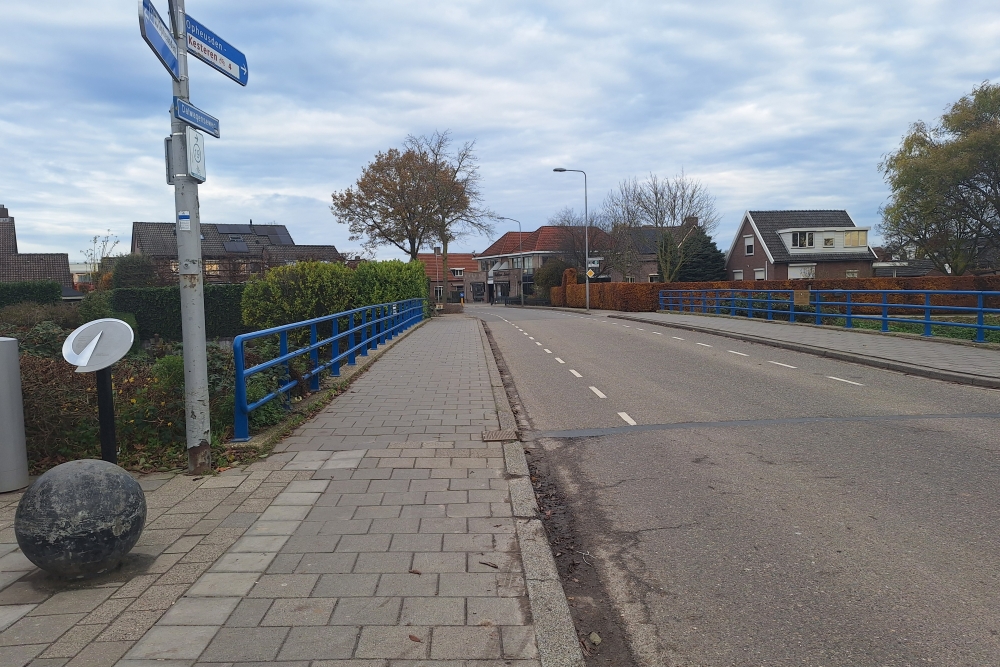
American soldiers from the 101st Airborne Division 506 Regiment pass the small station at Opheusden in October 1944. After the failed attempt to capture the bridge over the Rhine at Arnhem, the Allies tried with all their might to maintain a bridgehead over the Waal in the Betuwe. The population had to evacuate in a hurry due to the fierce fighting. Some headed west and had difficult months ahead of them, while others managed to escape to liberated areas in the south.
On 3 October, soldiers from the 101st Airborne Division, known as the Screaming Eagles, took up positions near Opheusden and Dodewaard. Two days later, on 5 October, the German 363rd Division launched an attack near Opheusden in an attempt to push back the Americans and drive them out of the Betuwe. At the same time, they had sent two SS companies across the Rhine between Heteren and Randwijk, beyond Opheusden, to encircle the Americans. This led to fierce fighting around Opheusden. The SS soldiers were discovered by chance by Captain Dick Winters of the 2nd Battalion E Company and overpowered. The German attack failed. The front in the Betuwe stabilised on the western flank between Opheusden and Dodewaard. Regimental photographer Al Crochka took several photographs there. The experiences of E Company were filmed in 2001 in the drama series Band of Brothers by director and producer Stephen Spielberg.
Liberation Route Europe is a certified Cultural Route of the Council of Europe. With hundreds of sites and stories in nine European countries, the route links the main regions along the advance of the Allied Forces in 1943-1945.
The entire route consists of themed routes that can be travelled by by hiking, walking, cycling and car. These routes pass numerous historical and interesting sites and tell stories from a multitude of perspectives that were important in the final phase of World War II.
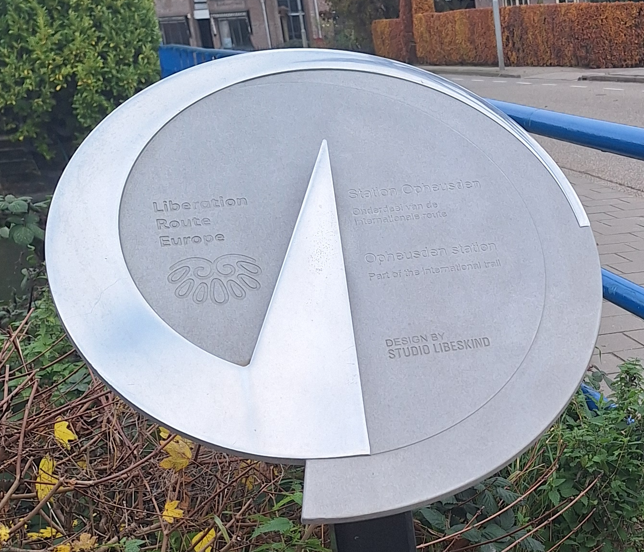
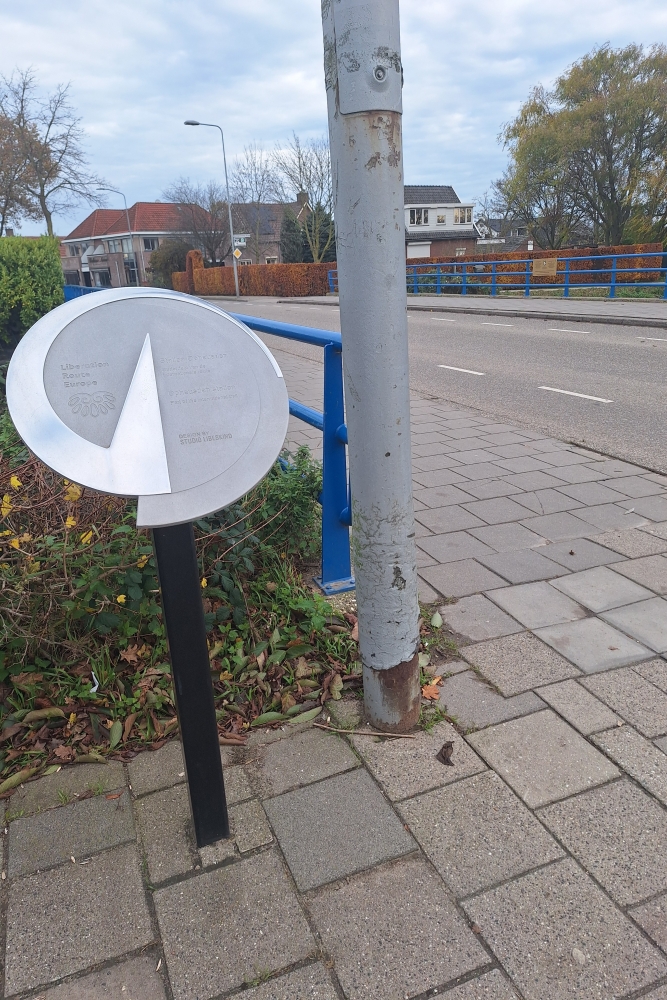
A separate group within the routes are the Vectors of Memory designed by renowned architect Daniel Libeskind. They form a symbolic family of landmarks that honor people, places and stories in the European landscape. The vectors are a topography of memory. They act as points in both space and time and connect to the liberation story. It is important that the markers convey a clear and powerful message.
There are 4 types of vectors:
- The Remembrance Site Vector
- The Crossroads Vector
- The Wall Vector
- The Floor Vector
For more information on the Vectors of Memory see the Liberation Route Europe site: https://www.lre-foundation.org/vectors-of-memory.
The routes can be found on the website of Liberation Route Europe or in the app through which many stories can also be listened to.
The routes can be found on the Liberation Route Europe website or in the app through which many stories can also be listened to.
Do you have more information about this location? Inform us!
Source
- Text: TracesOfWar & Liberation Route Europe
- Photos: Hans Tasma
- - https://www.liberationroute.com/nl/pois/1806/band-of-brothers

Nearby
Museum
- Visitor Center And Museum Dutch War Cemetery Grebbeberg - Rhenen
- The Liberation Hall Museum "De Casteelse Poort" Wageningen - Wageningen
Point of interest
- Bell of the Great Church Opheusden - Opheusden
- Aid Station Farm "De Spees" - Opheusden
- Aid post "Huize Van Zalingen" - Kesteren
Monument
- Major Horton Bridge & Memorial Opheusden - Opheusden
- Liberation Route Marker 080: Battle of Opheusden - Opheusden
- Air War Memorial Neder-Betuwe 1940-1945 - Opheusden
Cemetery
- Commonwealth War Graves General Cemetery Opheusden - Opheusden
- Commonwealth War Graves Communal Cemetery Dodewaard - Dodewaard
- Dutch War Cemetery Grebbeberg - Rhenen
Remembrance Stone
- Memorial stones Maurice and Yetty Elzas - Wageningen
- Memorial Stones Bowlespark 2 - Wageningen
- Stumbling Stones Ambachtstraat 7 - Ochten
Fortification
- Kolff-Casemate KLF001 Maneswaard - Opheusden
- Casemate SZW1 Markstraat - Kesteren
- Casemate SZW2 Parallelweg - Kesteren
Crash site

Looking for reliable information or news facts about WW2? Do you want to create your own battlefield tour to sights of wars from the past? Or are you interested in war medals and their recipients? TracesOfWar.com tells you more!
More information

© STIWOT, 1999-2025. All rights reserved. Privacy statement, cookies, disclaimer and copyright