
Denge Sound Mirrors



Denge Sound Mirrors
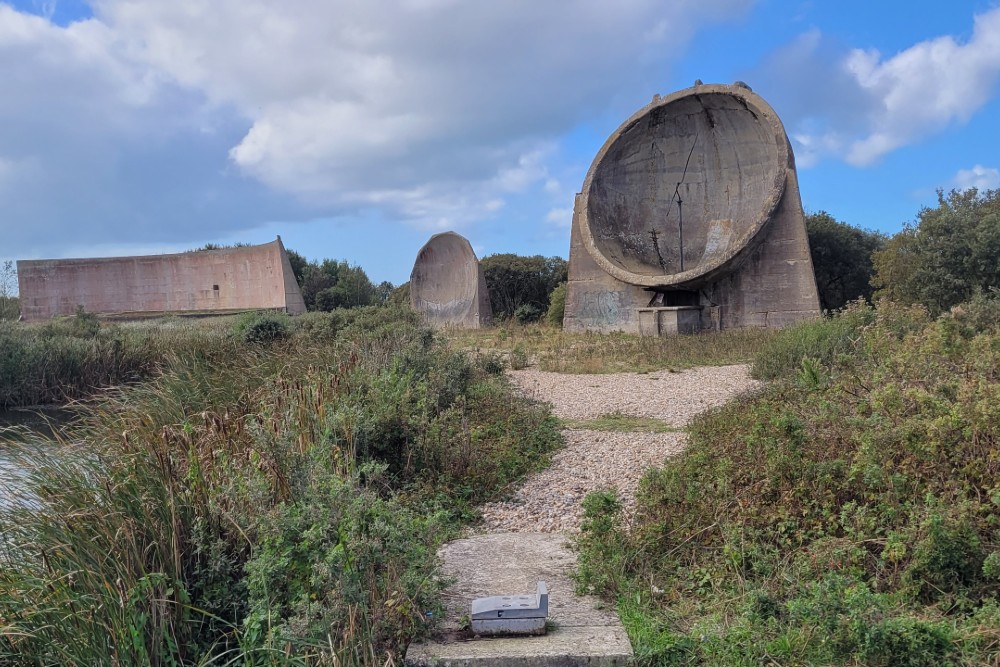
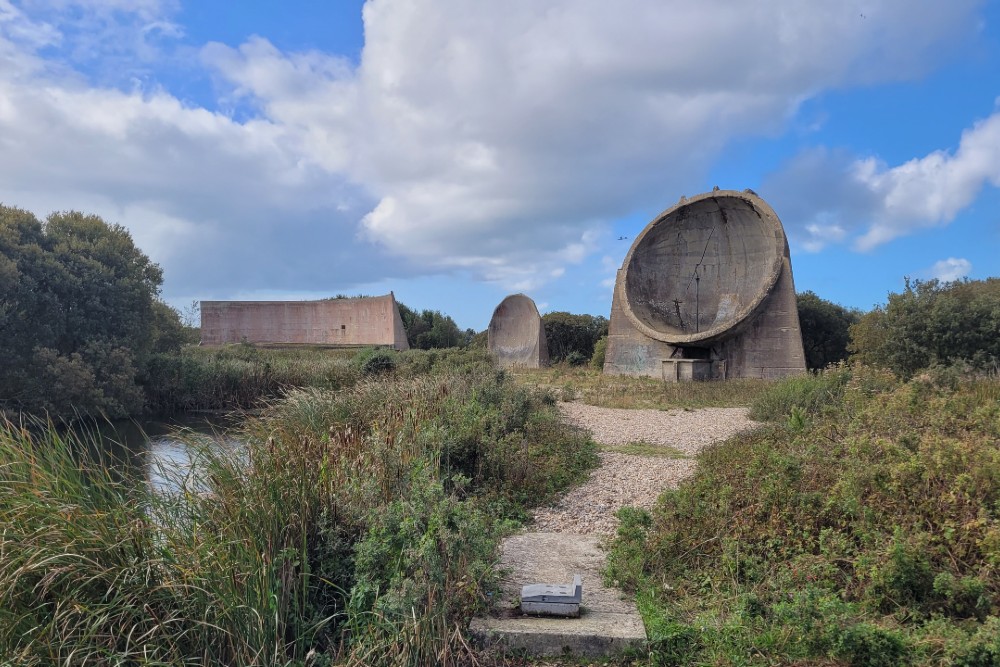
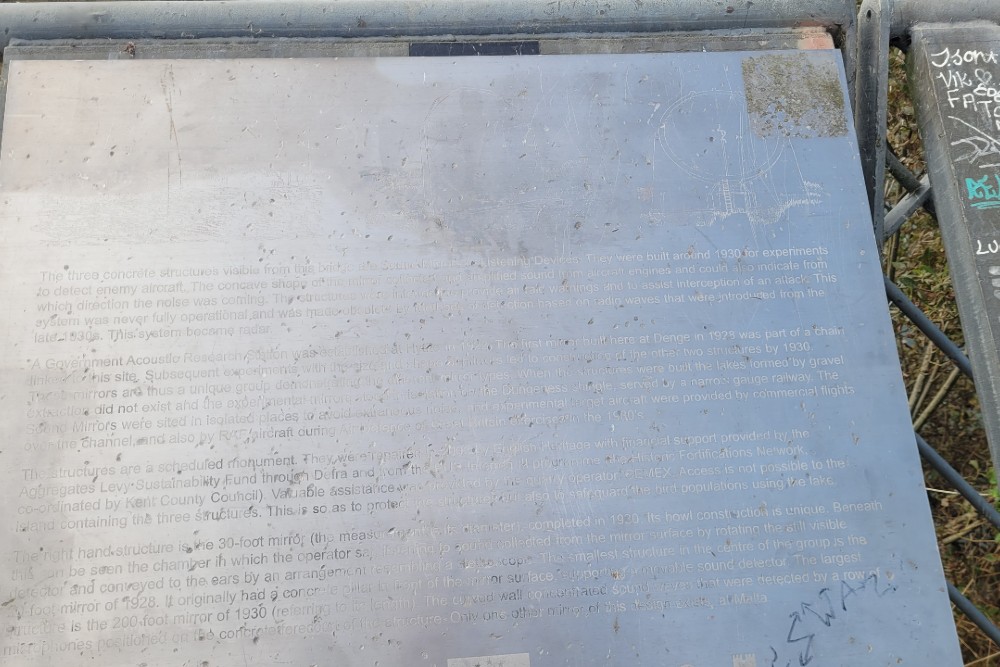
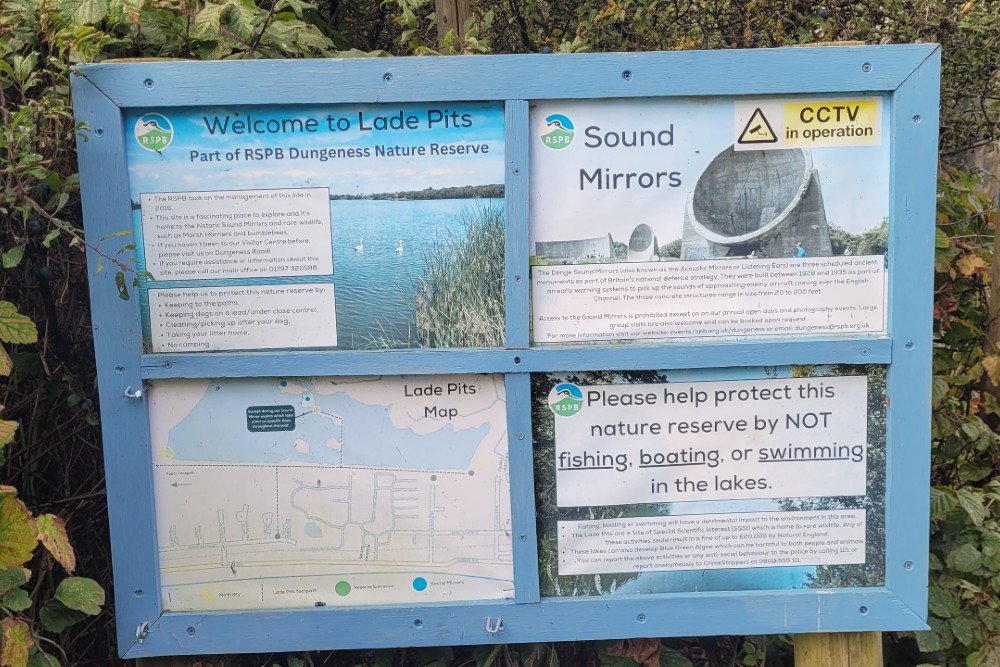
"The three concrete structures visible from this bridge are Sound Mirrors or Listening Devices. They were built around 1930 for experiments to detect aircraft. The concave shape of the mirror collected and amplified sound from aircraft engines and could also indicate from which direction the noise was coming. The structures were intended to provide air raid warnings and to assist interception of an attack. This system was never fully operational and was made obsolete by methods of detection based on radio waves that were introduced from the late 1930s. This system became radar.
A Government Acoustic Research Station was established at Hythe in 1922. The first mirror built here at Denge in 1928 was part of a chain linked to this site. Subsequent experiments with the size and shape of mirrors led to the construction of the other two structures by 1930. These mirrors are thus a unique group demonstrating the different mirror types. When the structures were built the lakes formed by gravel extraction did not exist and the experimental mirrors stood on isolation on the Dungerness shingle, served by a narrow gauge railway. The Sound Mirrors were sited in isolated places to avoid extraneous noise, and experimental target aircraft were provided by commercial flights over the channel, and also by RAF aircraft during the Air Defence of Great Britain exercise in the 1930's .
The structures are a scheduled monument. They were repaired in 2003 by English Heritage with financial support provided by the Aggregates Levy Sustainability Fund through Defra and from the EU's Interreg III programme (the Historic Fortifications Network, co-ordinated by Kent County Council). Valuable assistance was provided by the quarry operator, CEMEX. Access is not possible to the island containing the three structures. This is so as to protect the structures but also to safeguard the bird populations using the lake.
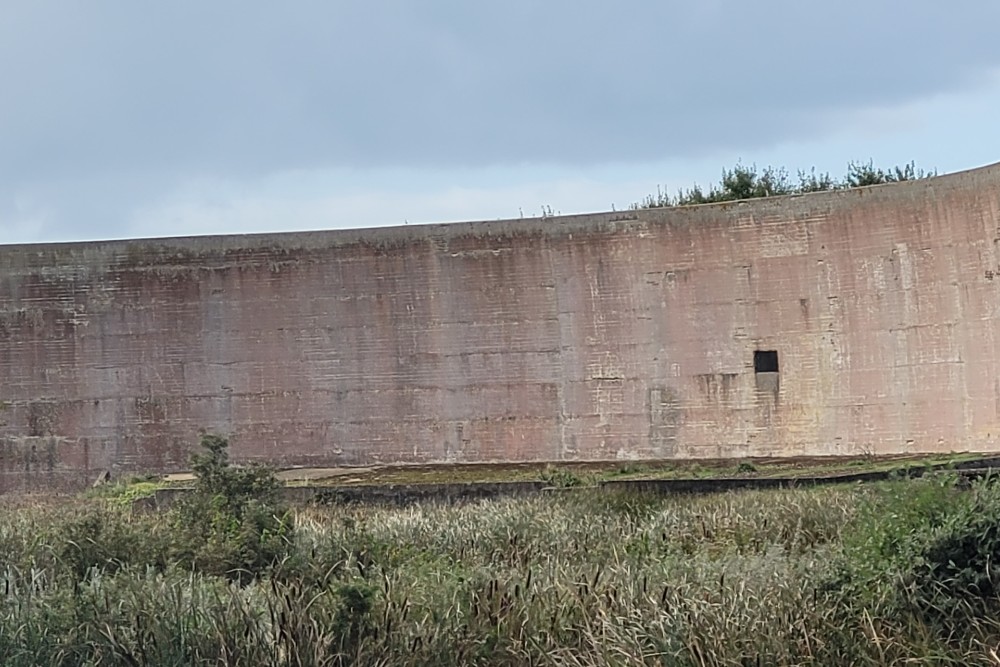
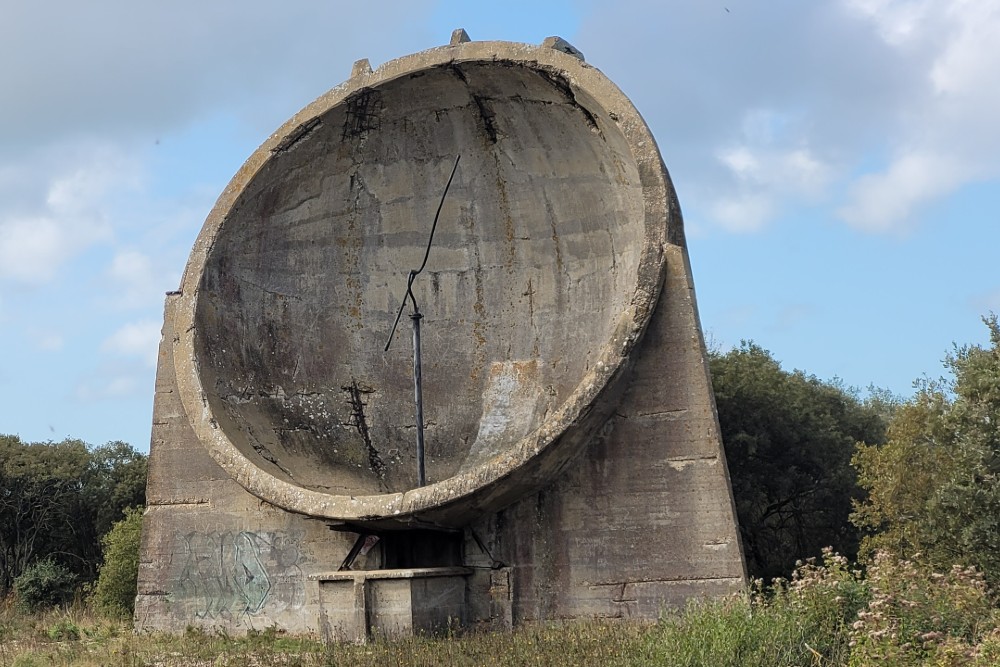
The right hand structure is the 30-foot mirror (the measurement is it's diameter), completed in 1930. Its bowl construction is unique. Beneath this can be seen the chamber in which the operator sat, listening to sound collected from the mirror surface by rotating the still visible detector and conveyed to the ears by an arrangement resembling a stethoscope. The smallest structure in the centre of the group is the 20-foot mirror of 1928. It originally had a concrete pillar in the front of the mirror surface, supporting a movable sound detector. The largest structure is the 200 foot mirror of 1930 (referring to its length). The curved wall concentrated sound waves that were detected by a row of microphones positioned on the concrete forecourt of the structure. Only one other mirror of this design exists, at Malta."
Do you have more information about this location? Inform us!
Source
- Text: Sharky Ward
- Photos: Anthony (Sharky) Ward

Nearby
Museum
Point of interest
Monument
- War Memorial St. Nicholas Church - New Romney
- Burma Memorial New Romney - New Romney
- War Memorial New Romney - New Romney
Cemetery
- Commonwealth War Graves Lydd Cemetery - Lydd
- Commonwealth War Graves New Romney Cemetery - New Romney
- Commonwealth War Graves St. Nicholas Churchyard - New Romney
Fortification
- Pillbox FW3/24 New Romney - New Romney
- Pillbox FW3/22 St Mary's Bay - St Mary's Bay
- Pillbox FW3/22 St Mary’s Bay - St Mary’s Bay
Crash site

Looking for reliable information or news facts about WW2? Do you want to create your own battlefield tour to sights of wars from the past? Or are you interested in war medals and their recipients? TracesOfWar.com tells you more!
More information

© STIWOT, 1999-2025. All rights reserved. Privacy statement, cookies, disclaimer and copyright