
Prisoner of War Camp Stalag VIII F/318 Lamsdorf
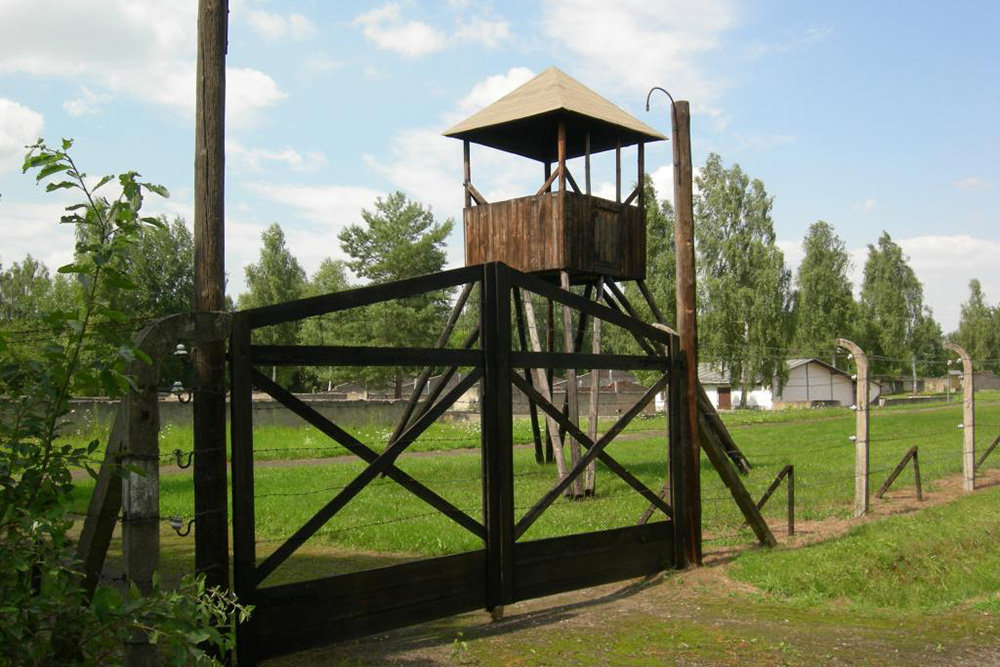

Stalag 318/VIII F (later renumbered Stalag 344) at Lamsdorf was one of the largest and most tragic prisoner-of-war camps in occupied Europe, operating between July 1941 and March 1945. It became notorious above all for the catastrophic conditions endured by Soviet prisoners, tens of thousands of whom perished there.
The camp was established in the summer of 1941 on ground already associated with earlier internment facilities dating back to the Franco-Prussian War and the First World War. When the first Soviet prisoners arrived after the German invasion of the USSR, no barracks had yet been built. Thousands of men were forced to live under the open sky, and later in pits dug into the earth, until rudimentary wooden huts were erected in 1942. Over the course of the war, the camp underwent several administrative changes: it was first designated Stalag 318, then Stalag VIII F, and finally subordinated to Stalag VIII B before being redesignated Stalag 344. Despite these bureaucratic shifts, its essential function remained the same: to hold vast numbers of captured soldiers, overwhelmingly from the Red Army.
The mortality rate among Soviet prisoners was catastrophic. Of the roughly 200,000 Soviet POWs who passed through Lamsdorf, about 40,000 died from starvation, disease, exposure, and mistreatment. The camp became known as the “Russenlager,” a place of deliberate neglect and racialized brutality. Other groups were also held there, including Italians after 1943, Yugoslavs, Greeks, Romanians, and smaller numbers of Poles and French. In 1944, the camp received around 6,000 captured participants of the Warsaw Uprising, along with 1,600 Slovak insurgents. Among them were notable figures such as Captain Witold Pilecki, historians Aleksander Gieysztor and Witold Kula, and writers like Roman Bratny. For these prisoners, cultural and educational activities offered some means of survival, though such opportunities were almost entirely denied to the Soviet captives.
Conditions in the camp were consistently harsh. Overcrowding, hunger, and forced labor defined daily life, and epidemics spread rapidly. The contrast between the treatment of Soviet prisoners and that of British or Western European POWs in neighboring compounds was stark, reflecting the racial hierarchy of Nazi policy. In January 1945, as the Red Army advanced, the Germans evacuated most of the camp’s population on foot in brutal winter marches. The sick, largely Soviet prisoners, were left behind; many died before liberation on 17 March 1945.
Today, only fragments of the camp remain: a fenced area with a reconstructed watchtower and traces of barracks. A granite monument, erected in 1997, commemorates the Warsaw insurgents who were imprisoned there.
Do you have more information about this location? Inform us!
Source
- Text: TracesofWar
- Photos: Jacques Lahitte


Looking for reliable information or news facts about WW2? Do you want to create your own battlefield tour to sights of wars from the past? Or are you interested in war medals and their recipients? TracesOfWar.com tells you more!
More information

© STIWOT, 1999-2025. All rights reserved. Privacy statement, cookies, disclaimer and copyright