
March-Phillipps, Gustavus Henry "Gus"
- Date of birth:
- March 18th, 1908 (London, United Kingdom)
- Date of death:
- September 12th, 1942 (Sainte-Honorine-des-Pertes/Calvados, Frankrijk)
- Buried on:
- Commonwealth War Graves Saint-Laurent-sur-Mer
- Service number:
- 39184
- Nationality:
- British
Biography
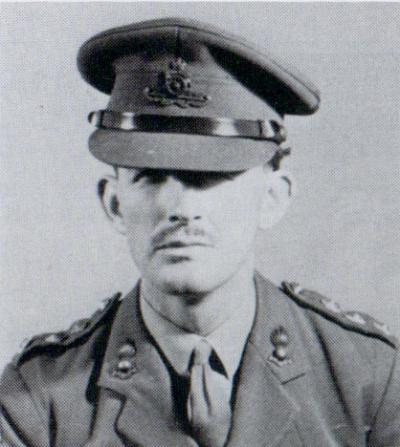
Major Gustavus Henry March-Phillipps DSO MBE was a seasoned special operations officer known for his daring missions. In January 1942, he led Operation Postmaster, a bold raid that captured two Italian ships from the neutral Spanish port of Santa Isabel and towed them to Lagos—earning him the Distinguished Service Order.
He was killed during Operation Aquatint in September 1942, a failed raid on the German-occupied French coast. Landing in the wrong spot, his team of 11 came under heavy fire. Several were captured, others killed; March-Phillipps was shot while attempting to swim ashore after his canoe was damaged.
He married fellow SOE agent Marjorie Stewart (later Lady Marling) in April 1942.
March-Phillipps is portrayed by Henry Cavill in the 2024 film The Ministry of Ungentlemanly Warfare, which dramatizes Operation Postmaster.
7 Commando (B Troop)
1941-1942: Maid Honor Force
1942: Small Scale Raiding Force
Do you have more information about this person? Inform us!
 Member of the Order of the British Empire (MBE, Military Division)
- Period:
- Second World War (1939-1945)
- Rank:
- Lieutenant
- Unit:
- HQ, British Expeditionary Force (BEF), British Army
- Awarded on:
- July 11th, 1940

- Period:
- Second World War (1939-1945)
- Rank:
- Major
- Unit:
- Small Scale Raiding Force (SSRF), Combined Operations Headquarters, War Office, British Government
- Awarded on:
- July 28th, 1942
- Awarded for:
- Operation Postmaster
The operation was of a most delicate and difficult nature, owing to the over-riding necessity of ensuring that no direct evidence of complicity on the part of the British Government or participation by British Forces would be secured by the Spanish or Axis Governments. It was known, moreover, that the ‘Duchessa d’Aosta’ with her deep draught, was lying in a very narrow channel, any divergence from which would run her aground.
The nucleus of the cutting out party was formed by the crew of the SOE ship, ‘Maid Honor’, a Brixham trawler of some 60 odd tons which sailed out to West Africa from Poole in September 1941, under the command of Captain March-Phillipps. The crew consisted of five army officers and other ranks, and this successful voyage in a time of war was in itself a considerable feat.
On the night of the operation, when the harbour of Fernando Po had been safely entered, Captain March-Phillipps according to his plan detached Lieutenant G. Hayes and party in one tug to secure the German vessels, while himself in another tug proceeded towards the ‘Duchessa d’Aosta.’
Leading the boarding party himself, he leapt on board as soon as the tug had approached sufficiently close, followed by the demolition parties whose task was to blow the holding cables with specifically prepared explosive charges.
All opposition was quickly quelled and the 28 Italians put under guard, while the cables were blown, and the tug’s hawser made fast, and the ‘Duchessa d’Aosta’ got under way. Captain March-Phillipps himself took command from her bridge of navigating her in the dark along a narrow channel. This was successfully accomplished and by daylight the convoy was below the horizon, and after a difficult passage reached Lagos safely.
Captain March-Phillipps displayed military qualities of very high order in his successful execution of this very difficult task, which secured for the British Government a 10,000 ton liner carrying a cargo valued at several hundreds of thousands of pounds, in addition to two smaller but valuable vessels. By his leadership and by his skill in training, planning and navigation, the operation was completed without any effective opposition from the enemy, or any trace of its origin becoming known."

- Period:
- Second World War (1939-1945)
- Rank:
- Major
- Unit:
- Small Scale Raiding Force (SSRF), Combined Operations Headquarters, War Office, British Government
- Awarded on:
- 1942
- Awarded for:
- Operation Aquatint

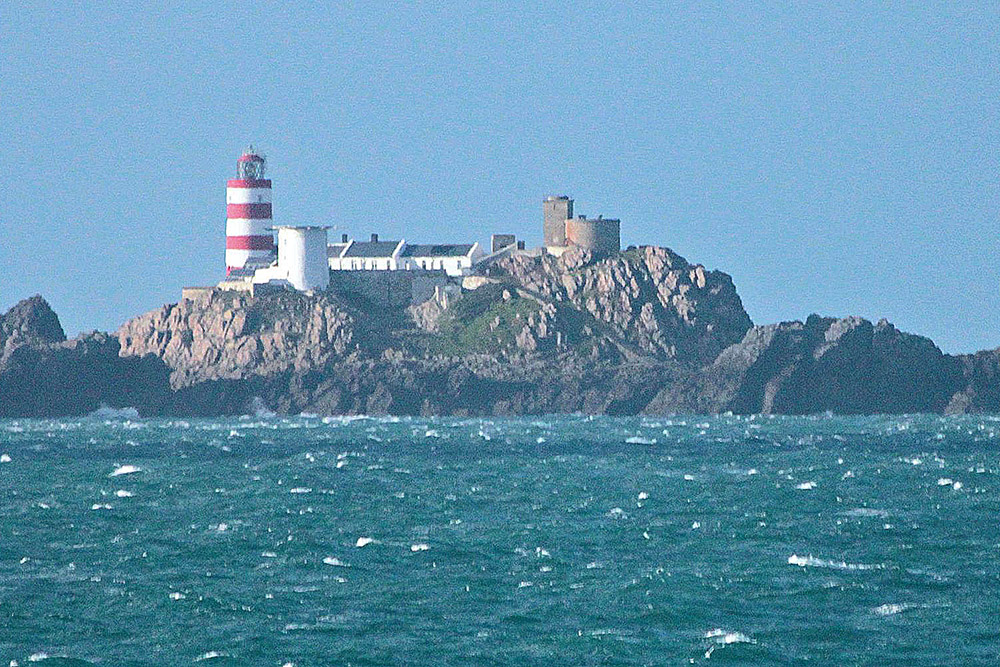
In a period of less than three weeks Major March-Phillips planned and executed three successful small scale raids, all of which he commanded himself, both from the Naval and the Military side. In the first of these, Operation "BARRICADE": a coast defence installation on the East side of the Cherbourg peninsula was attacked, and damage was caused to the enemy with bombs and small arms fire. The second operation, "DRYAD", resulted in the capture of the CASQUES lighthouse from which seven German Naval personnel were taken prisoner together with valuable code books and other papers. The third operation was a reconnaissance in a particularly difficult part of the Channel Islands, and was in every way completely successful. The S.S.R.F. suffered no casualties in any of the operations.
On three other occasions a force commanded by Major March-Phillips put to sea in M.T.B. 344, but owing to weather conditions having changed on arrival the other side of the Channel the operations had to be abandoned.
He has been at all times an inspiring leader to his force, with a complete personal disregard for danger or hardship, and has in every way shown himself to be a most vigorous and determined Commander.
Major March-Phillips is reported missing after operation "AQUATINT" and is believed to have been killed. In the event of his survival and return to allied occupied territory, he is strongly recommended for a bar to the D.S.O. If he is subsequently reported as killed, it is recommended that his name should be mentioned posthumously in despatches."
March-Phillips, reported missing, was recommended for a bar to the DSO for his leadership, approved by Lord Mountbatten. After his death had been confirmed he was awarded a mention in dispatches, in place of the DSO which was not awarded posthumously.
Sources
- Photo 1: (Public Domain)
- - LETT, B.G., Ian Fleming and SOE's Operation POSTMASTER, Pen & Sword Military, 2012.
- https://www.thegazette.co.uk/London/issue/34893/supplement/4250/data.pdf
- https://www.thegazette.co.uk/London/issue/35645/supplement/3293/data.pdf
- Casualty
- Was the Gunner buried on Omaha Beach the original 007? | The Observation Post
Photo
Themes

Looking for reliable information or news facts about WW2? Do you want to create your own battlefield tour to sights of wars from the past? Or are you interested in war medals and their recipients? TracesOfWar.com tells you more!
More information

© STIWOT, 1999-2025. All rights reserved. Privacy statement, cookies, disclaimer and copyright