
Cambier, Harry Michael Ashbrooke
- Date of birth:
- September 9th, 1921 (Plymouth/Devon, England)
- Date of death:
- October 10th, 1944 (Vorden/Gelderland, the Netherlands)
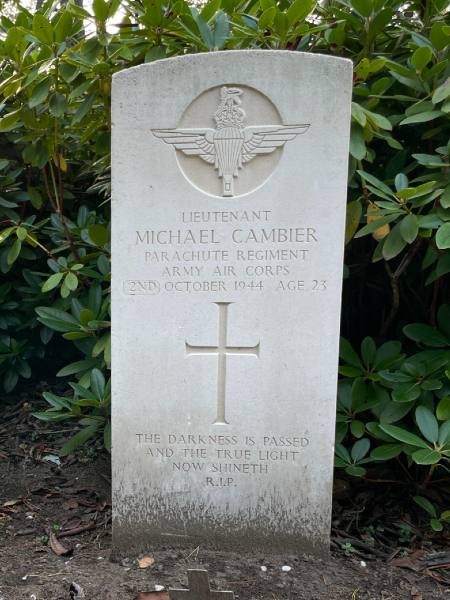
- Buried on:
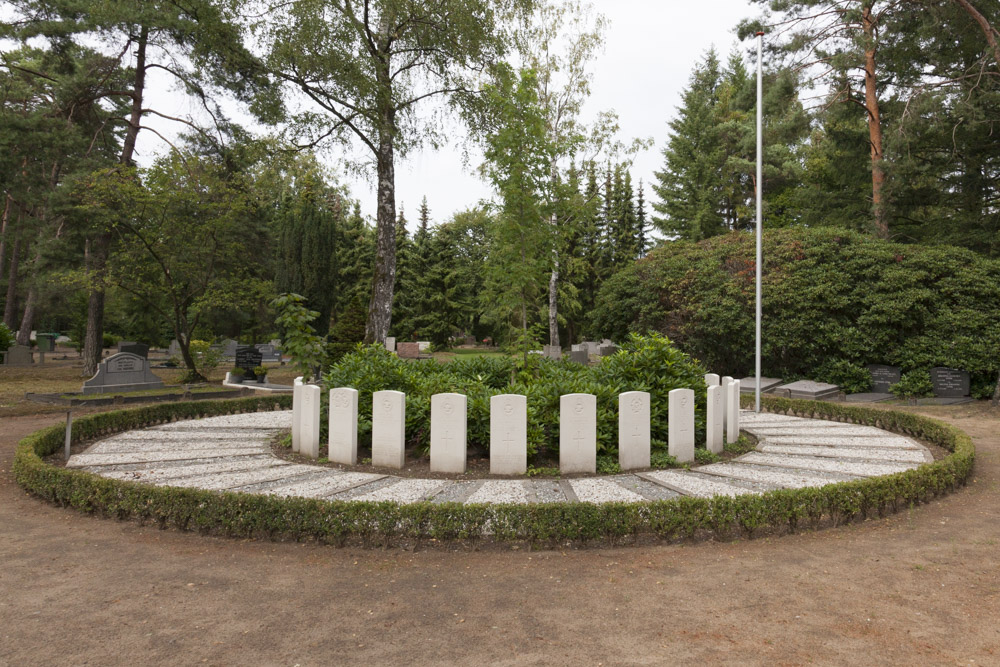
- Commonwealth War Graves Vorden
Grave: 17. - Service number:
- 226876
- Nationality:
- British
Biography
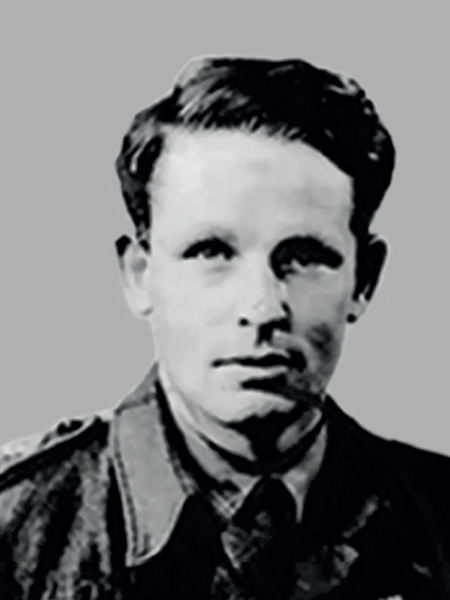
Lieutenant Harry Michael Ashbrooke Cambier, 156 Battalion, Parachute Regiment. Son of Lieutenant Colonel Valentin Cambier and Hilda Doris Cambier. Unmarried.
Harry Cambier was called up for military service after completing his studies in 1941. He initially served with the 70th Anti-Tank Regiment of the Royal Artillery and later with other Anti-Tank regiments in North Africa. In April 1943, he joined the 156th Battalion of the Parachute Regiment. On 18 September 1944, he landed on the Ginkel Heath during Operation Market Garden and was wounded in the ankle.
After the temporary ceasefire on 24 September, he ended up in the King William III barracks in Apeldoorn and from there on a train to a prisoner-of-war camp in Germany.
Together with several other officers, he managed to escape from the train and, with the help of the Dutch resistance, remained out of German hands for several days. After being arrested together with his colleague Bussel , they were transferred to the temporary headquarters of the SD in Villa “t Selsham in Vorden. There they fell into the hands of the notorious SD-Untersturmführer Ludwig Heinemann, who personally shot them in the head with a captured submachine gun for 'resistance activities”.
Cambier and Bussel were buried in the garden in front of the villa and, after the liberation, were identified and reburied in the General Cemetery in Vorden. After the war, Ludwig Heinemann was sentenced to death and shot by a Dutch firing squad on 10 February 1947.
In 2022, Omkijkpunt published the book “De 20 geallieerde gezichten van Vorden” (The 20 Allied Faces of Vorden). This book tells the stories of the 20 Allied soldiers buried in Vorden, including that of Harry Cambier.
Do you have more information about this person? Inform us!
 Mentioned in Dispatches
- Period:
- Second World War (1939-1945)
- Rank:
- Lieutenant
- Unit:
- Army Air Corps
- Awarded on:
- August 24th, 1944
"In recognition of gallant and distinguished services in Italy."

Sources
- Photo 1: Omkijkpunt
- Photo 2: Jan de Jager
- - FREERK BOEKELO & ROBERT ELLENKAMP, De 20 Geallieerde Gezichten van Vorden, Omkijkpunt, 2022.
- Joop Hazeu. Artikel in Wapenbroers december 2019. Oorlogsgravenstichting.
- https://www.thegazette.co.uk/London/issue/36668/supplement/3933
- https://paradata.org.uk/content/4640038-lieutenant-harry-cambier

Looking for reliable information or news facts about WW2? Do you want to create your own battlefield tour to sights of wars from the past? Or are you interested in war medals and their recipients? TracesOfWar.com tells you more!
More information

© STIWOT, 1999-2025. All rights reserved. Privacy statement, cookies, disclaimer and copyright